Introduction
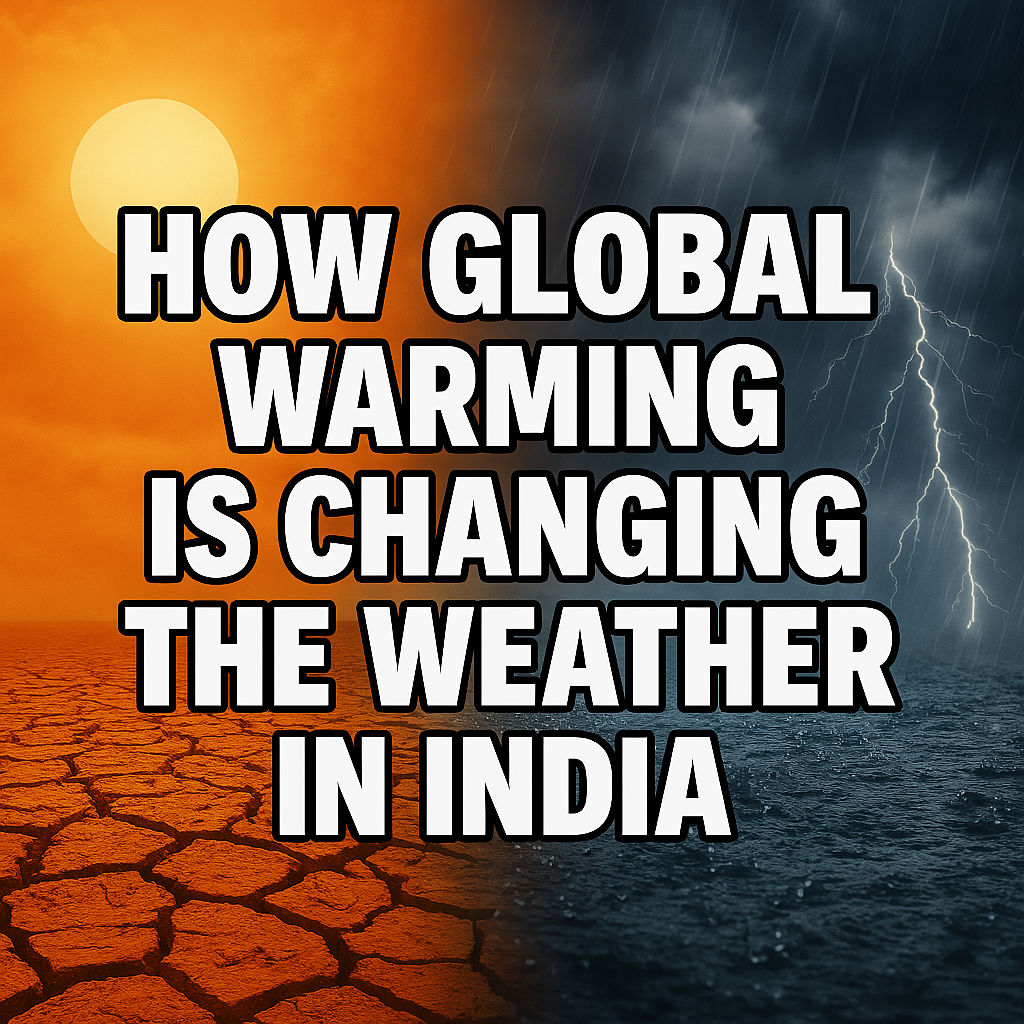
India, a land of diverse climates, is experiencing dramatic shifts in its weather patterns due to global warming. From scorching heat waves to erratic monsoons, the impact of rising temperatures is becoming increasingly evident. As the planet warms, India faces challenges that threaten agriculture, water security, and the livelihoods of millions.
Rising Temperatures and Heat Waves
India has witnessed a significant rise in temperatures over the past century, with heat waves becoming more frequent and intense. In recent years, cities like Delhi and Rajasthan have recorded temperatures exceeding 50°C, making survival difficult for vulnerable populations. Studies indicate that heat-related deaths have increased by 55% between 2000-2004 and 2017-2021.
Erratic Monsoons and Flooding
The monsoon season, which provides 80% of India’s annual rainfall, is becoming increasingly unpredictable. While some regions experience excessive rainfall leading to devastating floods, others suffer prolonged dry spells. The central belt of India has seen extreme rainfall events triple over the last 70 years, disrupting agriculture and infrastructure.
Melting Glaciers and Water Crisis
The Himalayan glaciers, which act as a crucial water source for millions, are melting at an alarming rate. This leads to rising sea levels and threatens coastal cities like Mumbai and Chennai. Additionally, erratic rainfall patterns have worsened India’s water crisis, affecting farmers who rely on consistent monsoon cycles for irrigation.
Impact on Agriculture and Food Security
Global warming is directly affecting India’s agricultural sector. Heat waves and irregular rainfall have led to reduced crop yields, particularly in wheat and rice production. In 2024, India had to ban wheat exports due to extreme heat damaging crops. If temperatures continue to rise, food shortages could become a major concern.
Conclusion
India is at the forefront of climate change, facing extreme weather events that threaten its economy and people. While global efforts to curb emissions are crucial, India must also focus on sustainable solutions like afforestation, renewable energy, and efficient water management. The time to act is now—before the effects of global warming become irreversible.